
Garden Retaining Walls Adelaide
Garden retaining walls up to 1 metre, built on engineered drainage and solid footings, so a sloping block becomes level, usable garden that holds its line for decades.
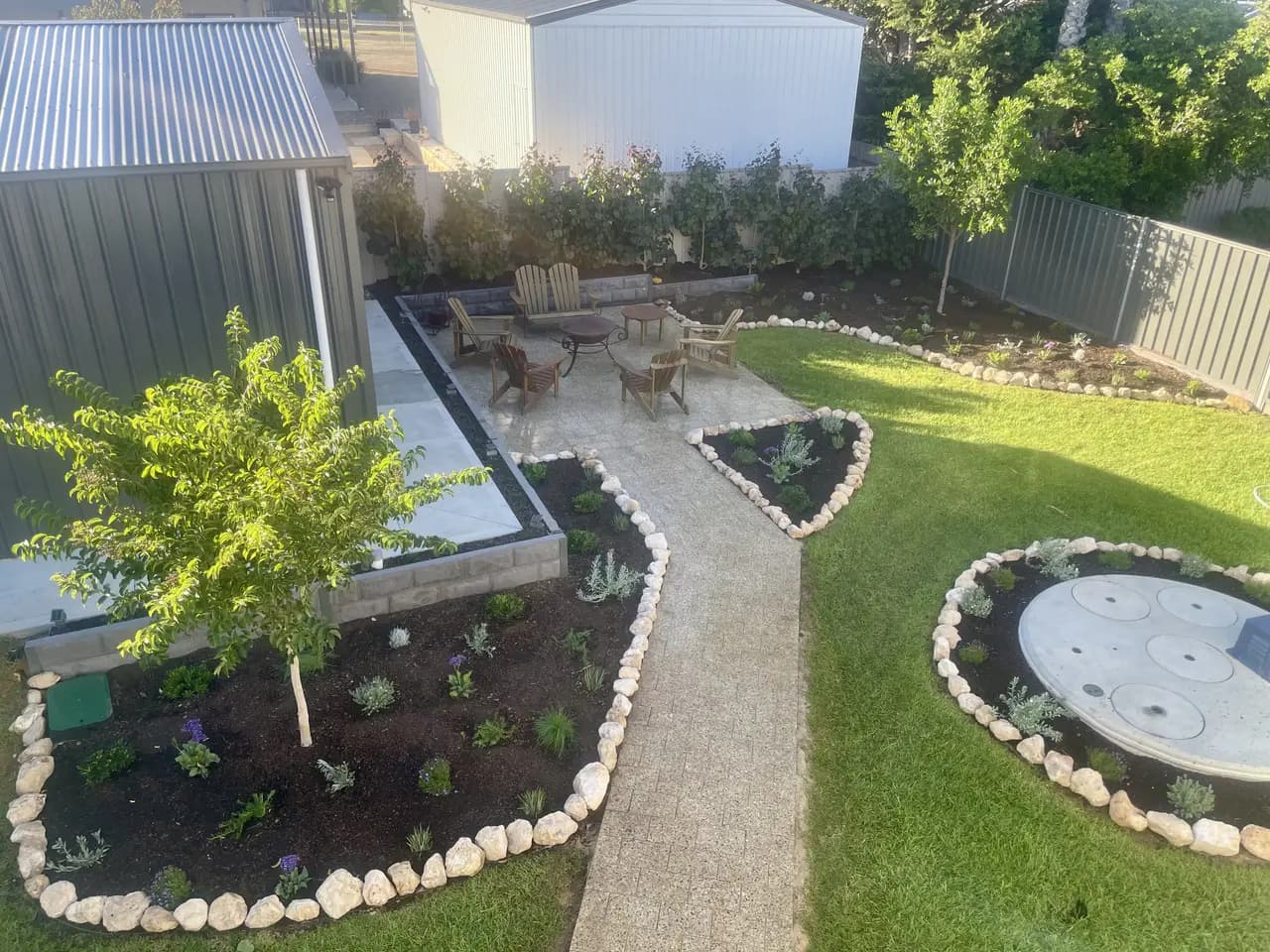
We build garden retaining walls up to 1 metre, which covers what most Adelaide gardens are actually asking for: holding a garden bed in shape, levelling a lawn, stepping a slope into space you can use, and finishing the change in height around paving or an outdoor living area.
One metre is where retaining sits squarely in the landscaper's craft, and it is the range our crew has been building in for more than 20 years. For the taller structural walls that call for engineering, we will point you to the right specialist so your project stays in expert hands throughout.
The best part of a retaining wall is the part you will never see. The drainage, the footings and the backfill are what keep it straight and true through decades of Adelaide seasons, and that is where the care goes.
What we build
Most garden retaining is quietly transformative. It takes a slope you have been walking around for years and turns it into a lawn the kids can use, or a bed that holds its shape season after season.
It is also where a garden tends to gain the most usable space for the money, which is why we like this work so much.
- Garden bed retaining, so beds keep their shape and the soil stays exactly where it belongs.
- Levelling a lawn or a play area on a block that slopes.
- Terracing a slope into 2 or 3 usable levels, with room to plant between them.
- Retaining around paving, steps and outdoor living areas.
- Raised planters designed into the garden rather than added on top of it.
For walls above 1 metre, we will connect you with a structural specialist we trust, so the engineering sits in expert hands and the garden around it sits in ours.
Approvals, handled before we quote
Retaining walls sit inside a clear set of rules, and working out which ones apply to your block is part of the service.
Height is the main factor, alongside what the wall holds back, how close it sits to a boundary, and whether anything above it carries load. Thresholds vary between councils, so we check what your specific site calls for and build that into the quote from the start.
Where council approval is required, we arrange it. Where an engineer's sign-off forms part of the picture, we say so early and factor it in. What you end up with is a wall that is properly approved and properly documented, which is exactly what you want in hand when you come to sell.
What makes a retaining wall last
The strength of a retaining wall lives underground, and water is the force it is built to manage.
Soil that drains freely stays light, so the wall carries what it was designed to carry, winter after winter. We build in an agi drain, aggregate backfill and a clear path for water to escape, so the ground behind the wall stays settled and stable.
Adelaide's reactive clay is why this matters more here than in most places. The soil swells with the wet and shrinks as it dries, so we size the footings for that seasonal movement and the wall holds its line right through it.
Materials, and what suits the garden
At this height all 3 options do the structural job beautifully when they are built properly, so the choice is genuinely about the look you want and the budget you have in mind.
- Treated pine sleepers with galvanised steel posts, for a warm, natural look that settles into a planted garden, and the most economical of the 3.
- Concrete sleepers, for a crisp modern line and the longest life of the 3, in finishes that read as natural stone from a couple of metres away.
- Stone and block, for the most substantial, permanent look, and the one that suits a period Adelaide home best.
We will talk you through which suits the rest of the garden, because a retaining wall draws a strong horizontal line across a yard and it sets the tone for everything planted around it.
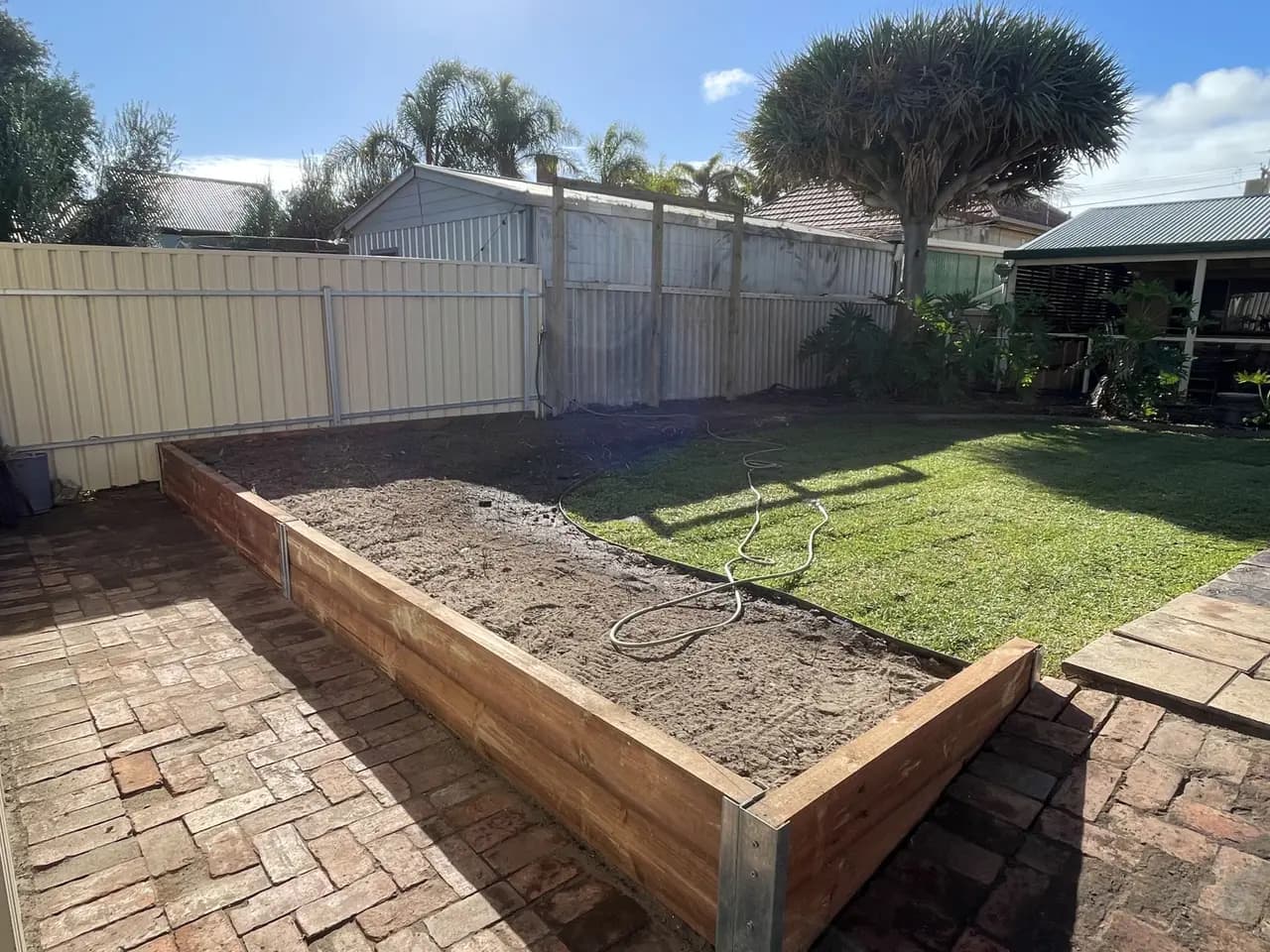
What a Yardner retaining walls project includes
Common questions
How high can you build a retaining wall?
We build garden retaining up to 1 metre, which covers the large majority of what an Adelaide garden calls for, and it is the range our crew has worked in for more than 20 years. For taller structural walls we will point you to a specialist, so the engineering is in the right hands from the outset.
Do I need council approval for a retaining wall?
We work that out for you, and it is part of the service rather than something you need to go researching. Height is the main factor, along with what the wall holds back, how close it sits to a boundary and whether anything above it carries load, and the thresholds vary between councils. We confirm what your block requires before quoting, arrange the approval where one is needed, and hand you a wall that is properly documented.
What makes a retaining wall last?
Drainage, mostly. Soil that drains freely stays light, so the wall carries what it was built to carry through every wet winter. We build in an agi drain, aggregate backfill and a clear escape route for water, and we size the footings for Adelaide's reactive clay so the wall holds its line as the ground moves with the seasons.
What materials do you build in?
Treated pine sleepers with galvanised posts, concrete sleepers, or natural stone and block. At this height all 3 do the structural job beautifully when they are built properly, so it comes down to the look you want and the budget you have in mind. Timber is the most economical, concrete sleepers last the longest, and stone gives you the most presence.
Can retaining be done as part of a larger garden project?
Yes, and it is the most cost-effective way to do it. Retaining sets the levels, and the levels decide where the paving, the lawn and the beds can go, so building it inside the main project means it is set once and everything else is designed around it. If a garden project is on the horizon, this is a decision worth making early.
Related services
Start the conversation today
If your home is ready for a garden that matches it, we'd be glad to hear from you. Tell us about your space and budget, and we'll be in touch to arrange a time.
- 0405 306 789
- Adelaide, South Australia. Metro and beyond, project by project
- Projects from $15,000 to $150,000+