Best Plants for Adelaide Gardens
5 June 2026 · 8 min read
Choose for Adelaide's conditions first, the look second
Most plant guides are written for nowhere in particular. This one is written for Adelaide, because the conditions here are specific enough to decide what thrives and what limps along for a season before you pull it out.
Three things shape every planting choice in this city. Summers are hot and dry, with long stretches above 35 degrees and months where useful rain simply does not arrive. Soil across the plains is mostly heavy clay, alkaline, and slow to drain in winter while setting like concrete in summer. And the Adelaide Hills sit in a different climate again, with genuine winter frost that settles in low pockets and gullies and will quietly kill anything frost-tender.
Get those three right and the design takes care of itself. A plant that suits your soil and aspect will look better with less water and less fussing than a more fashionable choice fighting the site. That is the principle behind every plant Yardner puts in the ground: right plant, right position, chosen to look established and stay that way.
Hedging and screening that holds its shape
Hedging does the structural work in an Adelaide garden. It hides fences and neighbours, frames a view, and gives the whole space a sense of order even when the beds are loose and informal. The trick is picking a species that suits the height you actually want, because a plant pruned permanently against its nature always looks stressed.
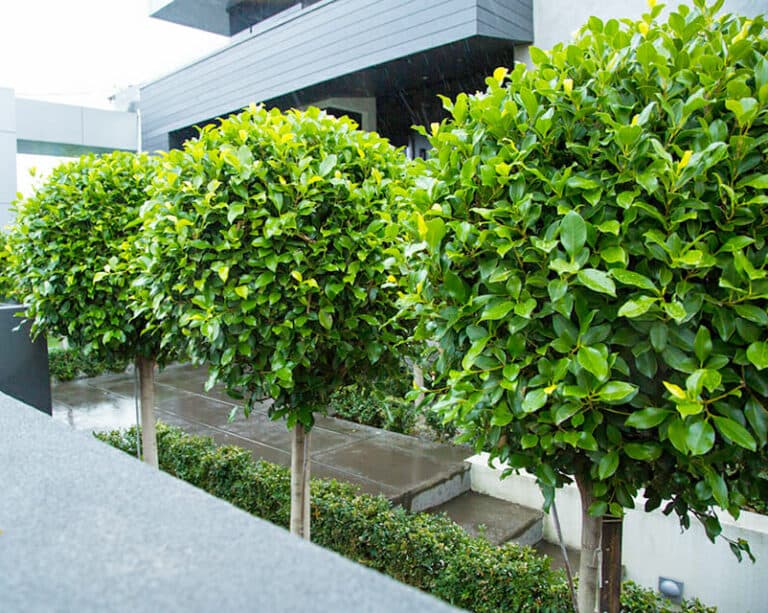
For a tall, dense privacy screen on the plains, Pittosporum 'Silver Sheen' is hard to beat: fast, fine-leafed, and tolerant of clay once established, though it dislikes the coldest Hills frost pockets. Lilly Pilly (Syzygium and Acmena selections such as 'Resilience' or 'Backyard Bliss') gives a lush green wall and now comes in psyllid-resistant forms, so you avoid the pimpled leaves that plagued older varieties. For a lower formal hedge or border, Westringia 'Grey Box' and dwarf Murraya hold a crisp edge and shrug off heat. In coastal gardens around Glenelg and Henley Beach, Westringia and coastal rosemary handle salt wind far better than a classic buxus, which tends to sulk near the sea.
Spacing and soil prep matter more than the label promises. We plant hedging into improved soil with gypsum worked through heavy clay to open it up, then water deeply but less often so roots chase moisture downward. That is what produces a hedge that knits together into one solid form rather than a row of separate shrubs.
Feature trees with the scale to anchor a garden
A single well-placed tree does more for a garden than almost anything else. It sets the scale, throws shade onto western walls that bake all afternoon, and gives the eye somewhere to land. The mistake is planting something that either never grows up or outgrows the space in 5 years and starts lifting paths and pipes.
For a classic front-garden statement, the evergreen Magnolia 'Little Gem' and 'Teddy Bear' stay in proportion on a suburban block, hold glossy leaves year round, and flower through the warm months. Ornamental pear (Pyrus 'Capital' or 'Chanticleer') gives an upright deciduous form, reliable autumn colour, and copes with Adelaide clay, though plant it for structure rather than relying on fruitless claims in every position. For a fine-textured native canopy, the WA peppermint (Agonis flexuosa) and the smaller eucalypt selections such as Eucalyptus 'Euky Dwarf' bring movement and bird life without the bulk of a full-sized gum. In the Hills, where frost and space are both greater, Chinese elm, claret ash and ornamental crab apple all earn their place.
Yardner sources feature trees as advanced, climate-suited stock rather than tube stock, so a new garden reads as established from the first season instead of looking like it needs a decade to mature. Mature trees are also where most of the property-value lift in a garden comes from, which matters whether you are staying or selling.
Ground covers and lawn that survive a real summer
Bare soil is the enemy in an Adelaide summer. It bakes, repels water, and grows weeds. Ground covers knit beds together, keep roots cool, and cut watering dramatically once they fill in, so they are some of the highest-value plants in the whole garden.
For sun-baked beds and slopes, Myoporum parvifolium (creeping boobialla) is a tough native that spreads fast and flowers white in spring. Grevillea 'Bronze Rambler' and prostrate forms of rosemary handle heat and poor soil while feeding nectar birds. For softer, more lush cover in part shade, Dichondra 'Silver Falls' and native violet (Viola hederacea) fill in beautifully. Ornamental grasses such as Lomandra 'Tanika', Dianella and Poa labillardierei give movement, structure and near-zero maintenance, and they look as good in a contemporary garden as in a native one.
On lawn, the honest answer is that warm-season grasses suit Adelaide and cool-season ones fight it. Couch and kikuyu are toughest and cheapest to run; soft-leaf buffalo (such as Sir Walter) handles part shade and stays green longer with less water than the fescue blends that brown off and need constant overseeding. Where a lawn gets little use, is heavily shaded, or sits over services, quality artificial grass is a legitimate low-maintenance call, and we install it where it genuinely makes sense rather than as a default.
Natives and drought-tolerant picks that look intentional
Native and drought-tolerant planting has come a long way from the scrappy, grey, formless look it once had. Chosen and arranged well, these plants give you a garden that survives water restrictions, feeds local birds, and still reads as designed rather than left to its own devices.
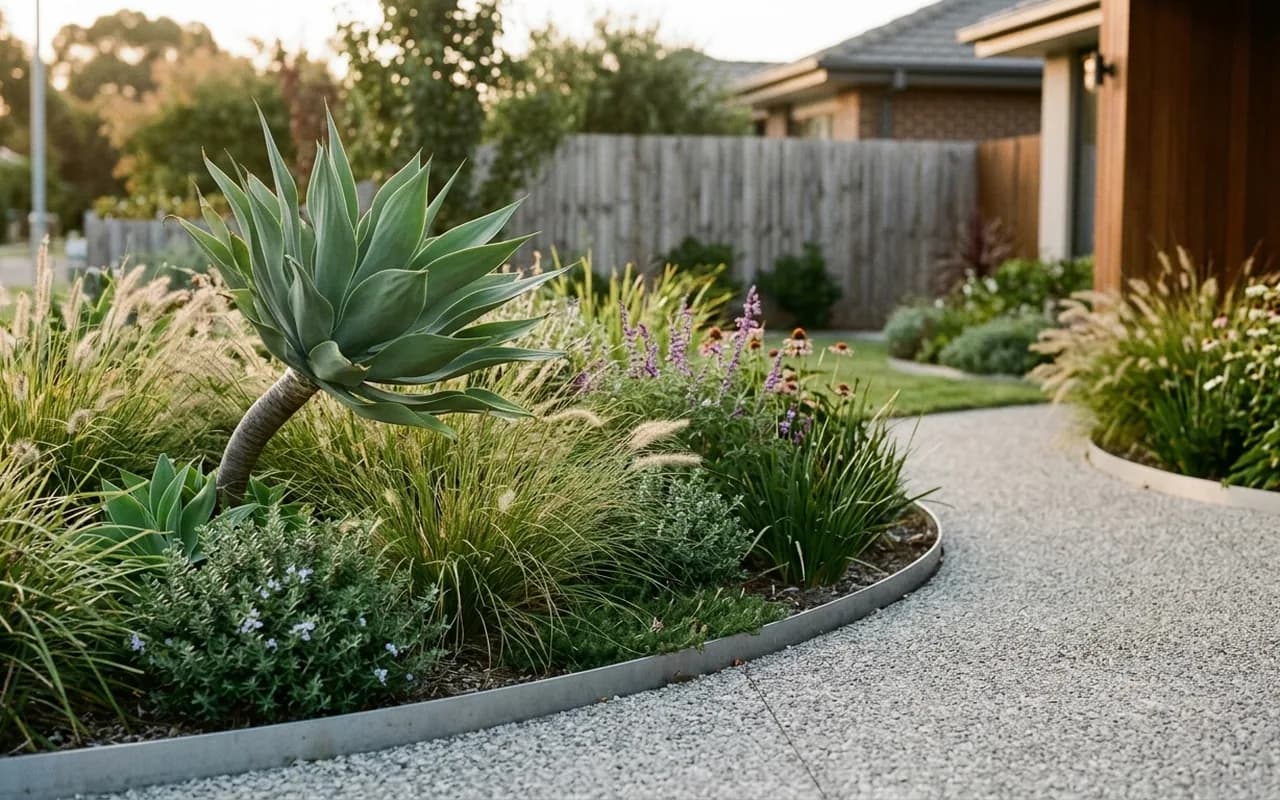
The workhorses for Adelaide are Grevillea (from groundcovers to the larger 'Moonlight' and 'Robyn Gordon'), Correa for shade and winter flower, Westringia for clipped structure, and Anigozanthos (kangaroo paw) for vertical colour through the warm months, treating the tall hybrids as relatively short-lived and the dwarf forms as longer-term. Pair them with hardy exotics that share the same Mediterranean rhythm: lavender, rosemary, Salvia, Teucrium and Phlomis all thrive in the same hot, well-drained beds and stretch the flowering season. Succulents and structural plants such as Agave attenuata, Aloe and Senecio carry the look through the driest months when little else is at its best, with the caveat that the softer succulents resent Hills frost.
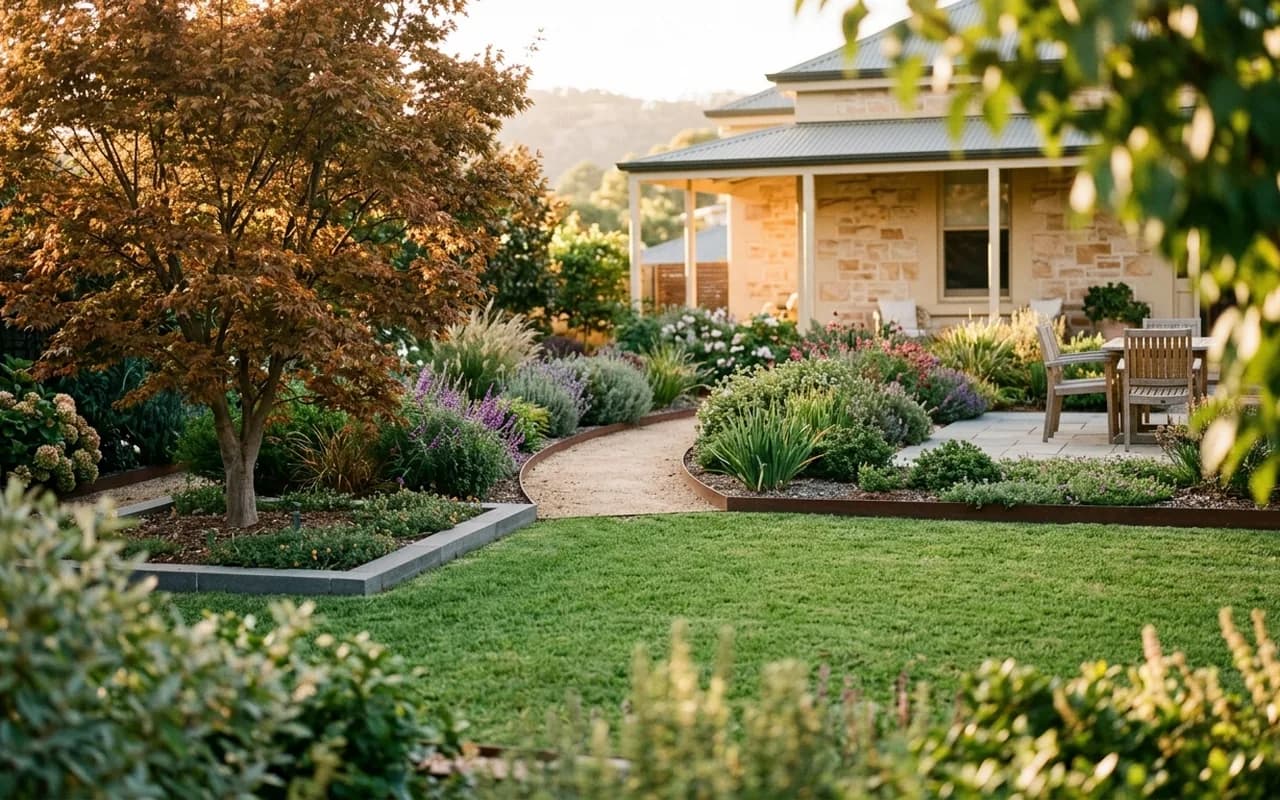
The design principle that ties it together is repetition and restraint: a limited palette, planted in generous drifts, with structural evergreens holding the bones so the garden never looks thin in winter. That is what separates a considered drought-tolerant garden from a collection of survivors.
How Yardner puts this into a real garden
A plant list is only the starting point. The reason two gardens with the same species can look completely different is everything around the planting: how the soil was prepared, how plants were grouped, what size they went in at, and whether the design has any structure holding it together.
Yardner works with an established garden rather than a blank site. We assess your soil, aspect and the frost risk on your block, keep what is worth keeping, and build the planting plan around the conditions you actually have. Plants are sourced mature and climate-suited through our trade network, so the garden looks settled from the first season and stays low-maintenance as it grows in. Projects typically run from $15,000 to $150,000+ depending on scale and scope.
If you want a planted garden that suits Adelaide and the way you live, the next step is a consultation. Request one through the website or call 0405 306 789, and we will walk the space with you and put together a plan that fits your home and your soil.